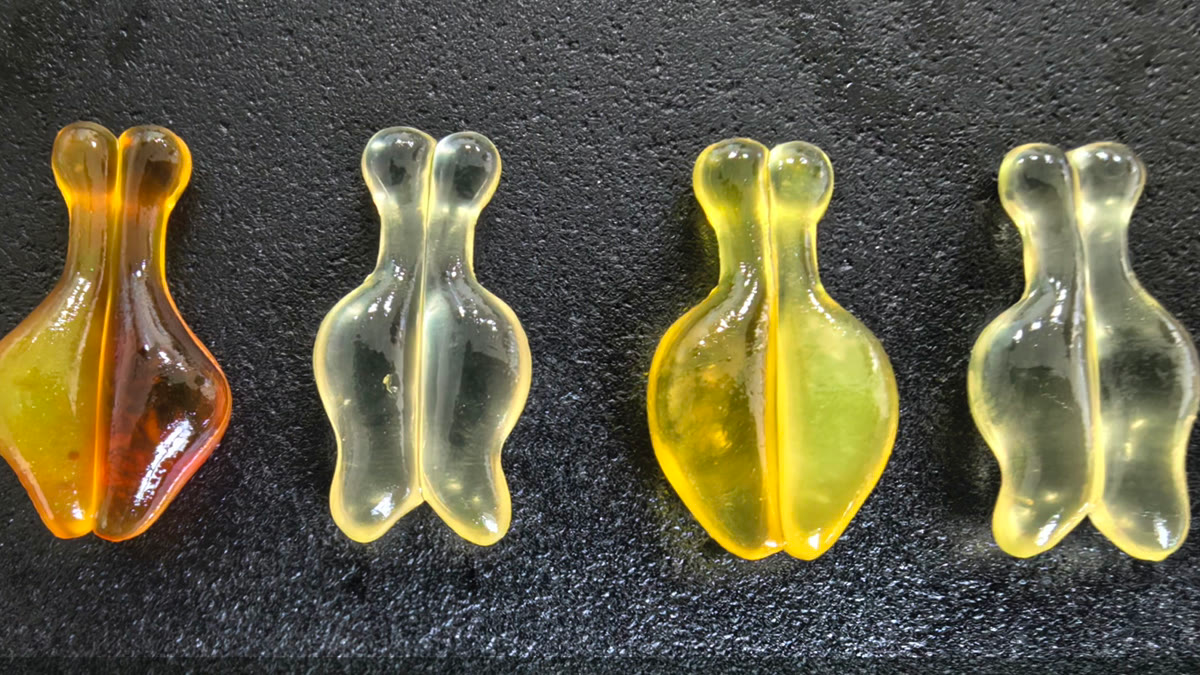


In rotary-die softgel encapsulation, the die roll is where the capsule shape is decided. This trial runs an AMYLOM plant-based shell through an existing gelatin racket-shaped die — a mold originally built for gelatin softgels, in a shape that is one of the less forgiving to form: a rounded head with a narrow handle.
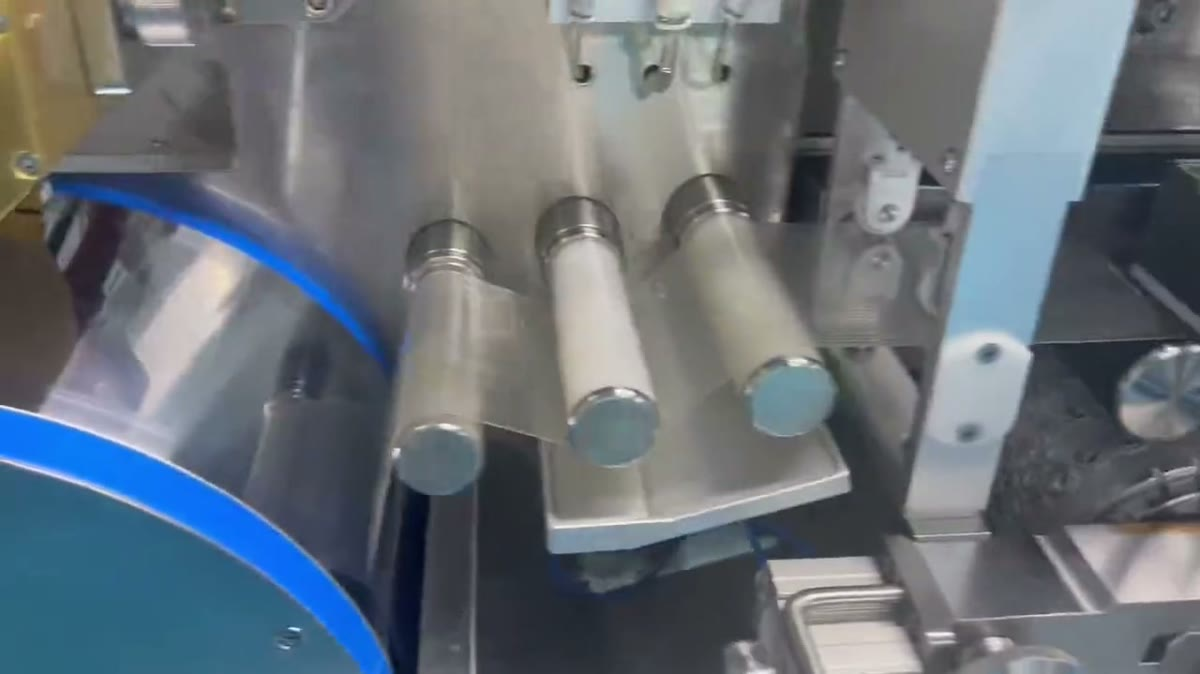
This clip looks at that die — first a close view of the racket cavities, then the twin dies in operation, where the plant-based hydroxypropyl starch shell ribbon is pressed into the cavities as the dies meet.
Running on an existing gelatin mold
The die in this clip was made for gelatin softgels. Reusing it for a plant-based shell is attractive for cost and timing — a brand keeps its capsule size, fill volume, and finished look without cutting new tooling. But a gelatin-tuned die is not a guaranteed fit. A hydroxypropyl starch shell forms in a narrower temperature window than gelatin and is more viscous, so ribbon strength, sealing, and release from the mold all have to be re-checked rather than assumed. That is the point of a short trial: see how the plant-based shell actually behaves in a die built for a different material.
Why the racket shape is demanding
Each cavity forms one half of a capsule — a rounded head that holds the fill and a narrow handle with no fill pocket of its own. As the two dies meet, the shell ribbon is pressed into both features at once and the sealing edge forms around the whole outline. The narrow handle is the demanding part: the wall there is thin and the radius is tight, yet the seam still has to close as reliably as it does across the wider head. If the ribbon is a little too soft, the handle can distort on release; a little too firm, and the seam along the narrow section may not close.
The die sets the outline, the process keeps it
Getting a plant-based shell to run cleanly on a gelatin racket die comes down to matching gel condition, ribbon thickness, wedge temperature, and die speed to the geometry. The answer comes from a short mold trial: run the shell through the actual die and watch how it forms, seals, and releases before committing the shape to a project. The die fixes the outline; whether it repeats batch after batch comes down to the process.
AMYLOM (Amylom Biotechnology) develops hydroxypropyl starch shells and supports custom mold trials for plant-based softgels, gel candy, and specialty formats. See our softgel capabilities or talk to our team about a custom shape project.