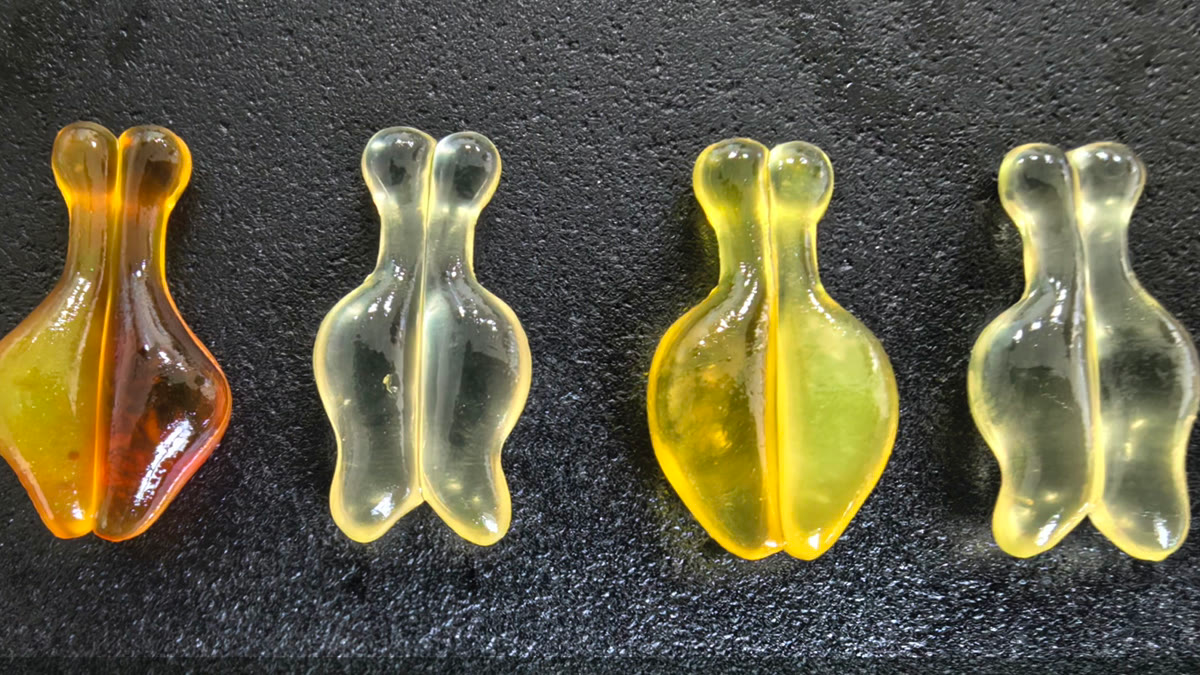

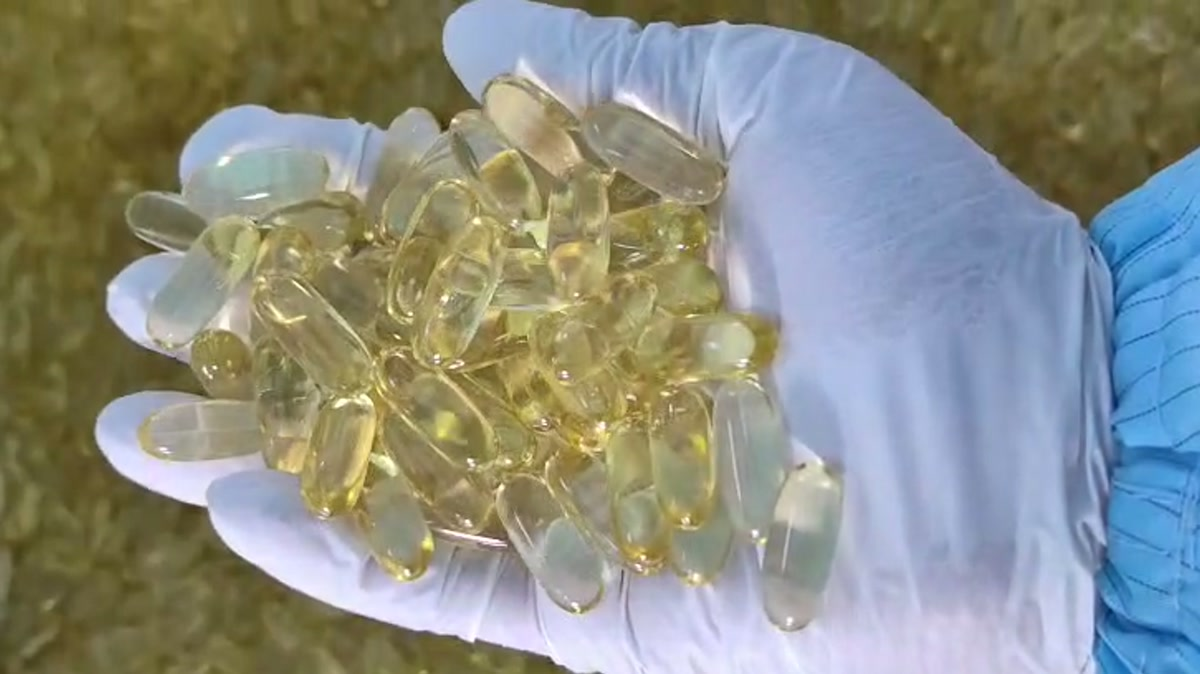
This clip picks up a flaxseed oil batch at the point where the capsule is finished — coming out of the tumble dryer, then handled in bulk. What is worth checking at that stage is what you can see and feel: how clear the shell is, how it takes the light, and how the capsules behave in the hand.
A pale oil is an honest test of a shell
Flaxseed oil is a light yellow-green. Put it behind a hazy shell and the color goes flat and the capsule reads cloudy; put it behind a clear one and both the color and the outline of the fill stay visible. In this batch the fill reads straight through, and the surface comes up glossy rather than matte.
Plant-based softgels have a reputation for looking duller than gelatin ones, and for most starch shells that is fair — starch films tend to recrystallize as they set and age, which scatters light and shows up as haze. The AMYLOM shell is formulated against that specific failure, and the finished capsule comes out ahead of an animal-gelatin shell on both clarity and gloss. The high-transparency formula behind it is covered in an earlier post.
Dry to the touch
Straight off the encapsulation line a softgel is still elastic and tacky. Drying pulls moisture out of the shell until it is firm and the surface no longer sticks, and the end point matters: an under-dried capsule feels sticky, clumps in the pack, and is awkward to handle anywhere downstream.
In the clip the capsules run loose through the fingers. Nothing clings to the glove, nothing sticks to its neighbor, and the shells hold their shape under the weight of the pile. That is what the drying stage is for, and it is easier to judge by hand than by any number on a batch sheet.
How it goes down
The eating end of it is simpler. The surface is smooth and the ends are rounded, so the capsule slips instead of catching — the reason softgels are easier to swallow than tablets to begin with. There is no animal gelatin in the shell, so none of the odor or aftertaste that some gelatin capsules carry.
Why this fill and this shell go together
Flaxseed oil is the common plant route to omega-3 — ALA rather than the EPA and DHA of fish oil — and it tends to sell to buyers who want the shell off animal sources as well. A gelatin capsule wrapped around a plant oil is a mismatch that shows up on the label, and it is usually why a flaxseed product comes to us looking for a plant-based shell in the first place.
AMYLOM (Amylom Biotechnology) manufactures plant-based softgels with gelatin-free hydroxypropyl starch shells, for supplements, cosmetics, and specialty formats. See our softgel capabilities or talk to our team about a plant-based softgel project.