
Custom softgel shapes are not only a branding decision. In rotary-die encapsulation, shape changes the fill pocket, sealing edge, capsule thickness, discharge behavior, and drying load. A shape that looks simple in a drawing can behave differently once the shell ribbon meets the die.
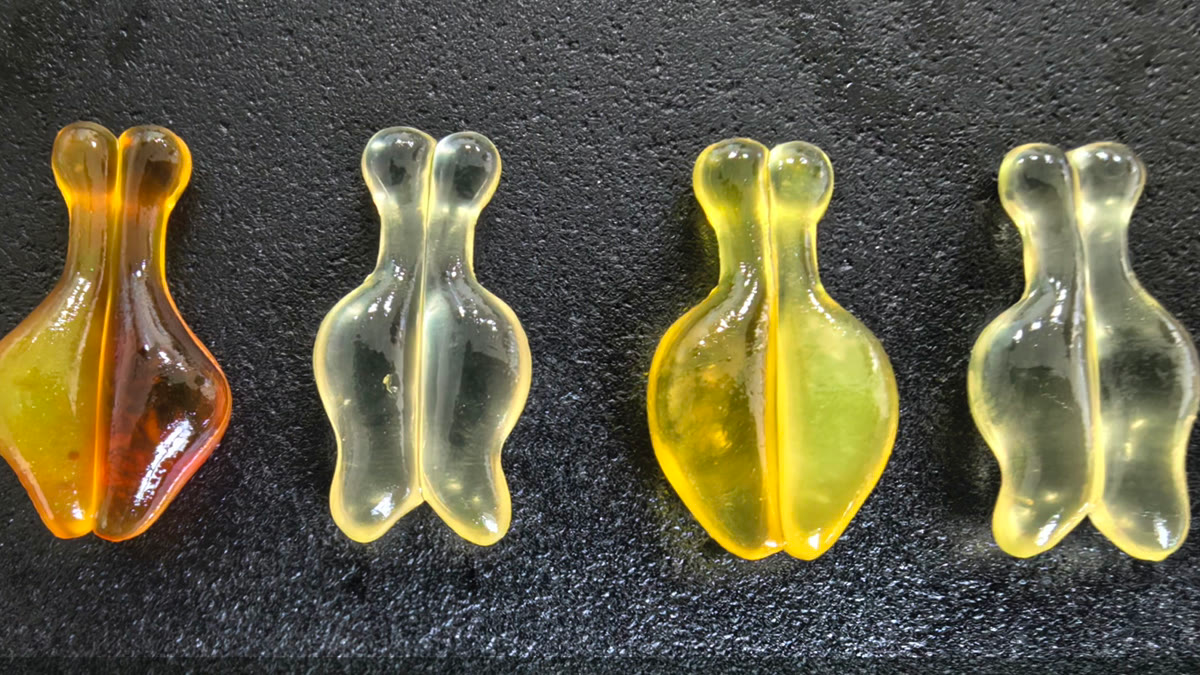
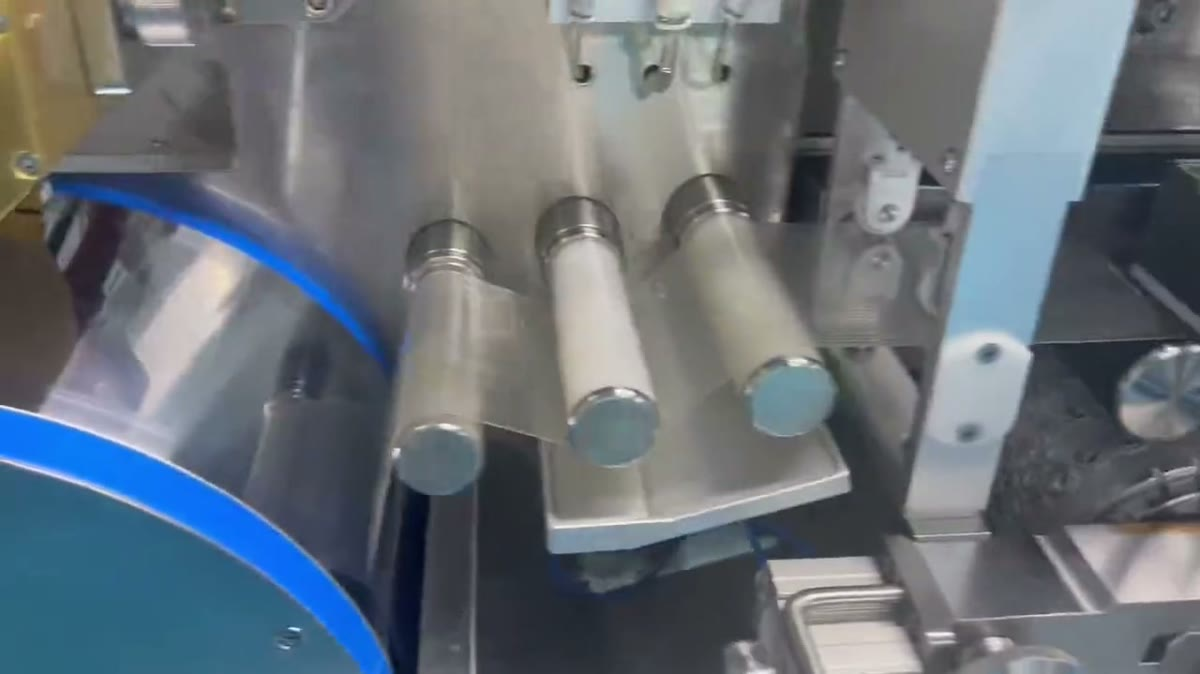
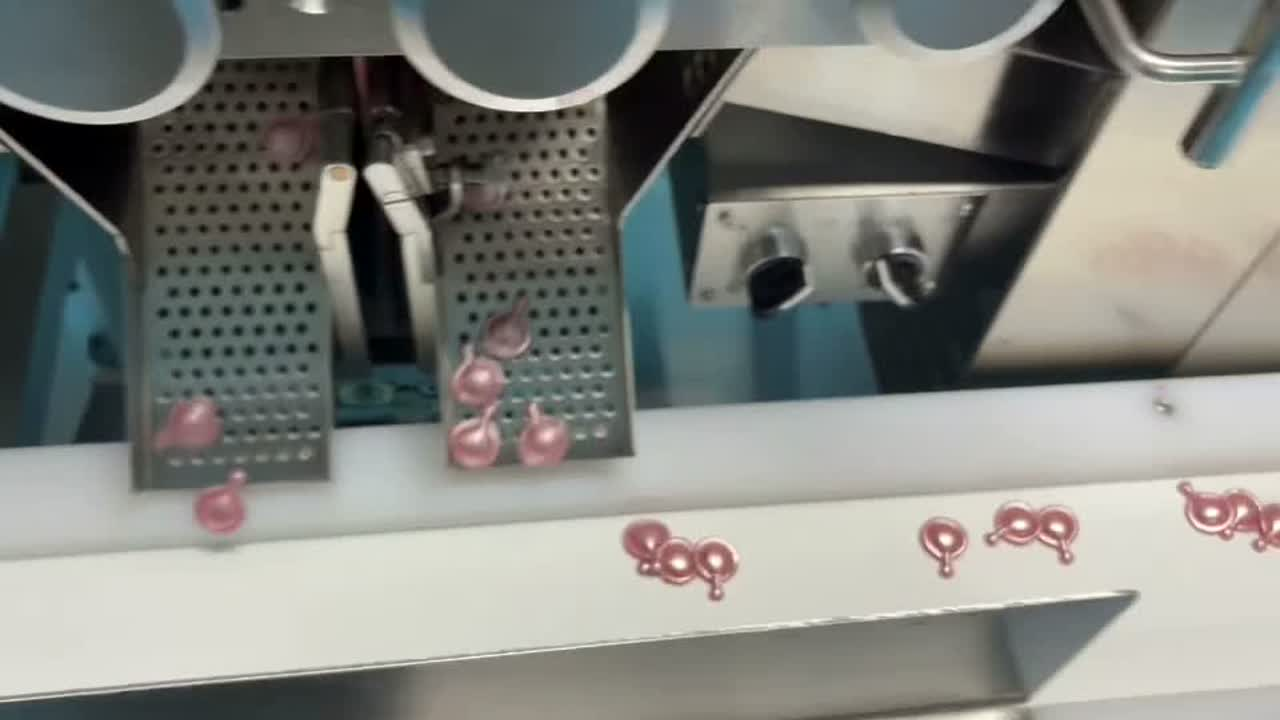
These two trials show AMYLOM plant-based softgels in non-standard geometries: a lucky-bag-shaped softgel running at 2.0 rpm, and a racket-shaped softgel running at 5.5 rpm. The different speeds are part of the process observation. For custom plant-based softgels, mold design and process settings have to be evaluated together.
Lucky-bag-shaped softgel, 2.0 rpm
The first trial uses a pouch-like decorative shape. The slower 2.0 rpm setting gives the shell more time to form and release around the narrow features of the mold. This matters because a custom contour can concentrate stress at the sealing edge, especially where the geometry narrows or changes direction.
Racket-shaped softgel, 5.5 rpm
The second trial uses a racket-shaped mold at 5.5 rpm. The finished pieces show a narrow handle and a rounded head, so the process has to manage both a small connecting section and a larger fill pocket. In this type of geometry, mold release and capsule transfer are as important as the shape itself.
What changes when the shape changes
Standard oval and oblong softgels are efficient because their geometry is forgiving. Custom shapes reduce that margin. The mold may need a different pocket layout, sealing edge, fill volume, ribbon thickness, or rotation speed. Drying may also change because the capsule wall is not distributed the same way across the body.
That is why custom plant-based softgels should be developed through mold trials, not only CAD drawings. The shell formula, mold geometry, and process parameters need to be checked as one system. A decorative shape is useful only if it can be formed, released, dried, and inspected with acceptable consistency.
AMYLOM (Amylom Biotechnology) develops hydroxypropyl starch shells and supports custom mold trials for plant-based softgels, gel candy, and specialty formats. See our softgel capabilities or talk to our team about a custom shape project.